
Why do Chinese grandmas dance in public squares?
Published: April 29, 2026
Short Answer
Square dancing (广场舞) is a uniquely Chinese phenomenon where groups of middle-aged and retired people — mostly women — gather in public squares, parks, and parking lots to dance in formation to loud music. It is the most popular form of exercise and social activity among older Chinese people, with an estimated 100 million participants across the country.
What started as a grassroots fitness movement in the 1990s has become a cultural institution. It is simultaneously beloved by its practitioners, complained about by nearby residents, and endlessly memed by younger Chinese people. But at its core, square dancing is about community, health, and the simple joy of moving together.
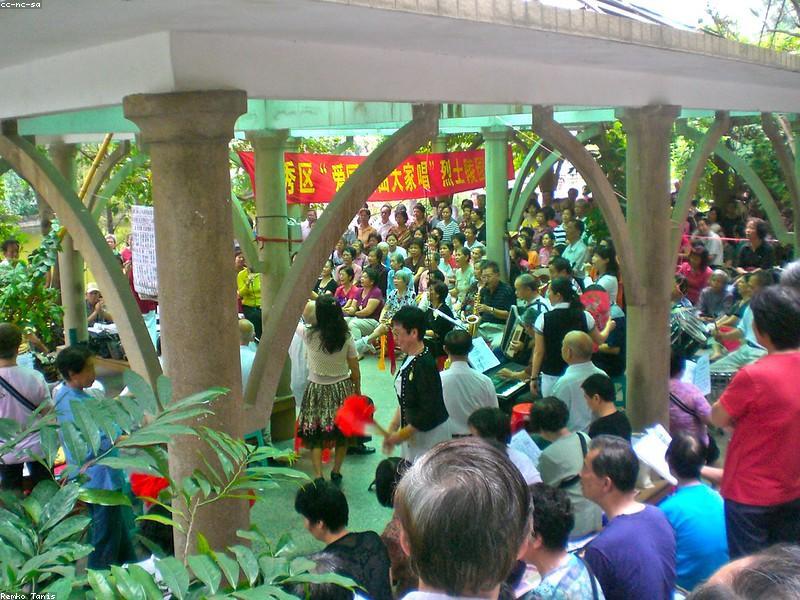
Chinese retirees square dancing in a public park at sunset
Advertisement
Deep Dive
What Square Dancing Actually Looks Like
If you walk through any Chinese city between 7 and 9 PM, you will likely hear them before you see them: groups of 20 to 200 people, standing in neat rows, dancing synchronized choreography to booming pop music from portable speakers. The dances range from simple step-touch routines to surprisingly complex fan dances, ribbon dances, and even hip-hop-influenced moves.
The music is loud. Incredibly loud. The speakers are often the size of small suitcases, mounted on wheels so they can be rolled to the dance spot. Popular square dance songs include earworms like "Little Apple" (小苹果), "The Hottest Ethnic Trend" (最炫民族风), and various C-pop hits remixed with heavy beats.
Participants are predominantly women over 50, though men join too, and some groups skew younger. Everyone wears comfortable clothing — often matching outfits purchased as a group. Some groups have matching scarves, hats, or even uniforms.
The History: From Communist Calisthenics to Pop Culture
Square dancing has roots in several traditions:
- Communist-era group exercises (广播体操) — from the 1950s onward, workers and students performed synchronized exercises to radio broadcasts. This normalized the idea of collective movement in public spaces.
- Yangge dancing (秧歌) — a traditional folk dance from northern China, performed in groups with fans and drums. Many square dance routines borrow from yangge.
- Ballroom dancing — in the 1980s and 90s, dancing in parks became popular as China opened up and people sought new leisure activities.
- The fitness movement — as China urbanized rapidly in the 2000s, older people who had moved to cities needed accessible, affordable exercise. Square dancing filled that need perfectly.
By the 2010s, square dancing had exploded into a cultural phenomenon. National competitions were organized, apps were built to teach routines, and dedicated square dance music became its own genre.
Why People Love It
For its practitioners, square dancing offers:
- Exercise — a free, accessible form of physical activity that does not require equipment or gym memberships
- Social connection — for retired people who might otherwise be isolated, the dance group becomes a second family
- Mental health — the combination of music, movement, and companionship is a powerful antidote to loneliness and depression
- Purpose — learning choreography, performing at events, and being part of a group gives structure to retirement
- Identity — being part of a dance group is a source of pride and belonging
Many square dance participants describe their groups with the same warmth that others describe their closest friendships. They celebrate birthdays together, travel to competitions, share meals, and support each other through health problems and family difficulties.
The Controversy: Noise, Space, and Generational Conflict
Square dancing is not without its critics. The most common complaints:
- Noise pollution — the loud music disturbs residents, especially in apartment complexes near parks and squares. Some residents have responded with water balloons, dogs, and even jammers to disrupt the speakers.
- Space competition — square dance groups sometimes occupy parking lots, basketball courts, or sidewalks, creating conflicts with other users. Videos of square dancers confronting basketball players or blocking traffic go viral regularly.
- Generational clash — younger Chinese people often find square dancing embarrassing or annoying. Memes mocking square dancers are a staple of Chinese internet culture.
The conflicts have occasionally escalated. In 2017, a man in Wuhan unleashed dogs on a square dance group. In various cities, residents have filed noise complaints, and local governments have implemented regulations limiting volume levels and dance times.
Government Response
The Chinese government has an interesting relationship with square dancing. On one hand, it supports the fitness and social benefits — the State General Administration of Sport even released a set of 12 "official" square dance routines to standardize the practice. On the other hand, it has had to address the noise and space complaints.
Some cities have designated specific areas and time windows for square dancing. Others have installed noise-monitoring equipment in parks. The government generally views square dancing positively as a sign of social stability and community health, but it walks a fine line between supporting the dancers and addressing legitimate complaints.
Square Dancing Goes Digital
Square dancing has embraced technology in surprising ways:
- Apps — platforms like Tangdou (糖豆) offer tutorials, music, and social features for square dancers
- Short video — many square dance groups post their routines on Douyin and Kuaishou, gaining millions of followers
- E-commerce — square dance instructors sell costumes, speakers, and accessories through livestream shopping
- Online communities — WeChat groups coordinate schedules, share new routines, and organize events
Some square dance leaders have become influencers with massive followings, turning a grassroots hobby into a media phenomenon.
The Bigger Picture
Square dancing tells a story about modern China that goes beyond dance steps. It reflects:
- Rapid urbanization — millions of older people relocated to cities, leaving behind rural communities and extended families
- The generation gap — people who grew up during the Cultural Revolution now live in a world of smartphones and streaming
- The aging population — China's over-60 population will reach 400 million by 2035, creating massive demand for senior social activities
- Public space scarcity — dense cities leave limited room for community gathering
Love it or hate it, square dancing is one of the most distinctly Chinese cultural phenomena of the 21st century. If you visit China, take an evening stroll through any park and you will witness something that exists nowhere else on Earth.