
What happens during Chinese New Year?
Published: April 29, 2026
Short Answer
Chinese New Year, or Spring Festival (春节, Chun Jie), is the most important holiday in Chinese culture — a 15-day celebration centered on family reunion, feasting, and driving away bad luck. The festivities peak on New Year's Eve with a massive reunion dinner, followed by fireworks, red envelopes for children, and visits to relatives. It also triggers the largest annual human migration on Earth.
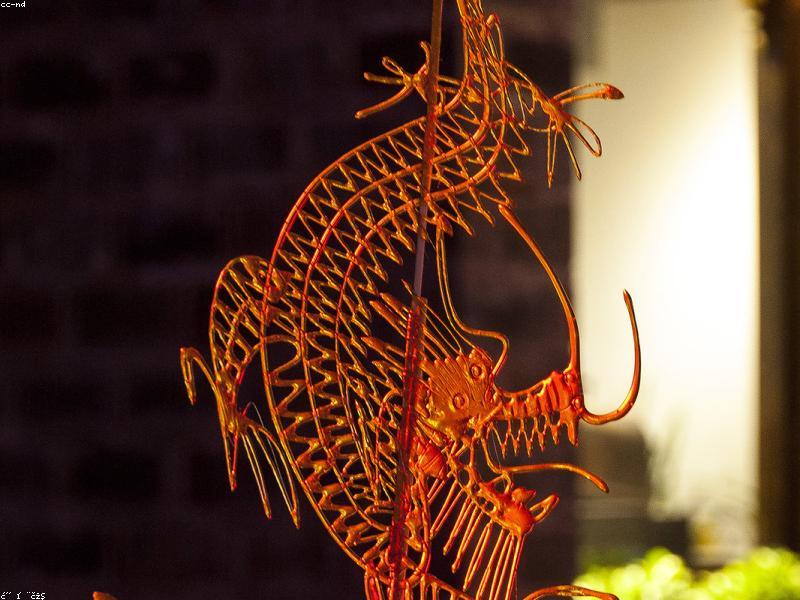
Red lanterns and spring festival decorations hanging across a traditional Chinese street
Advertisement
Deep Dive
The Countdown: New Year's Eve (Chuxi)
Everything builds toward New Year's Eve (除夕, Chuxi). Families gather — no matter how far apart they live — for the reunion dinner (年夜饭, nianyefan). This is the Chinese equivalent of Thanksgiving dinner, but with far more cultural weight. Missing it is genuinely hurtful to parents and grandparents.
The dinner table overflows with dishes chosen for their symbolic meaning:
- Fish (鱼, yú) — sounds like "surplus," representing abundance. Some fish must be left uneaten to symbolize surplus carrying into the new year.
- Dumplings (饺子, jiǎozi) — shaped like ancient gold ingots, representing wealth. Families in northern China wrap them together on New Year's Eve.
- Spring rolls (春卷, chūnjuǎn) — golden and crispy, representing gold bars.
- Niangao (年糕, niángāo) — sticky rice cake, symbolizing rising higher each year (the name is a homophone for "year high").
- Tangyuan (汤圆) — sweet glutinous rice balls representing family togetherness and reunion.
Firecrackers and Fireworks
At midnight, the sky erupts. Firecrackers and fireworks are set off to scare away Nian (年), a mythical beast that legend says comes out on New Year's Eve to terrorize villages. The tradition of banging pots and lighting explosives dates back over 2,000 years. Today, despite environmental concerns that have led some cities to ban fireworks, the tradition persists in most of China.
The noise is extraordinary. In rural areas, entire villages fire off strings of firecrackers simultaneously. The air fills with sulfur smoke and red paper debris. It is chaotic, loud, and genuinely thrilling.
Red Envelopes (Hongbao)
Red envelopes (红包, hóngbāo) containing cash are given to children and unmarried younger relatives. The red color symbolizes good luck and is believed to ward off evil spirits. The amount should be an even number (odd numbers are associated with funerals), and the number 8 is especially auspicious because it sounds like "prosper."
In recent years, WeChat red envelopes have become wildly popular. During the 2025 Spring Festival, billions of digital red envelopes were exchanged on the platform. The tradition has evolved from a child's pocket money into a social currency among adults — bosses give them to employees, friends exchange them in group chats, and even strangers can send them.
The Spring Festival Travel Rush (Chunyun)
The 40-day travel period around Chinese New Year, called chunyun (春运), is the largest annual migration in human history. In 2025, an estimated 9 billion trips were made across China during chunyun. Migrant workers who left their rural hometowns for jobs in cities make the journey home, often battling for train tickets weeks in advance.
The scramble for tickets crashes the 12306 railway booking app every year. Standing-room-only train rides lasting 20+ hours are common. Some workers ride motorcycles hundreds of kilometers home. The emotional weight of this journey — and the guilt of those who cannot make it — is a defining cultural experience of modern China.
The 15 Days of Celebration
Spring Festival is not a single day. Each day has its own customs:
- Day 1 — Visit paternal relatives, set off firecrackers
- Day 2 — Married women visit their parents' home (回娘家)
- Day 3 — Considered unlucky for social visits; stay home or visit temples
- Day 5 — Welcome the God of Wealth with firecrackers
- Day 7 — Everyone's birthday (人日); eat noodles for longevity
- Day 15 — Lantern Festival (元宵节); eat tangyuan, solve riddles on lanterns, watch dragon and lion dances
Taboos and Superstitions
During the first few days of Spring Festival, a long list of taboos applies:
- Do not sweep the floor (you might sweep away good luck)
- Do not wash your hair (the character for hair, 发, is the same as in "prosper")
- Do not say unlucky words like "death," "broken," or "losing"
- Do not break dishes (if you do, say "碎碎平安" — peace year after year — because 碎 sounds like 岁, meaning "year")
- Do not give gifts in sets of four (四 sounds like 死, death)
These rules are taken seriously enough that many Chinese people pre-clean their homes, get haircuts, and stock up on supplies before the festival begins.