
What is the Mid-Autumn Festival?
Published: April 29, 2026
Short Answer
The Mid-Autumn Festival (中秋节, Zhongqiu Jie) falls on the 15th day of the eighth lunar month — the night when the moon is at its fullest and brightest. Families gather to share mooncakes, gaze at the moon, and tell children the legend of Chang'e, the moon goddess. It is the second most important traditional Chinese festival after Spring Festival.
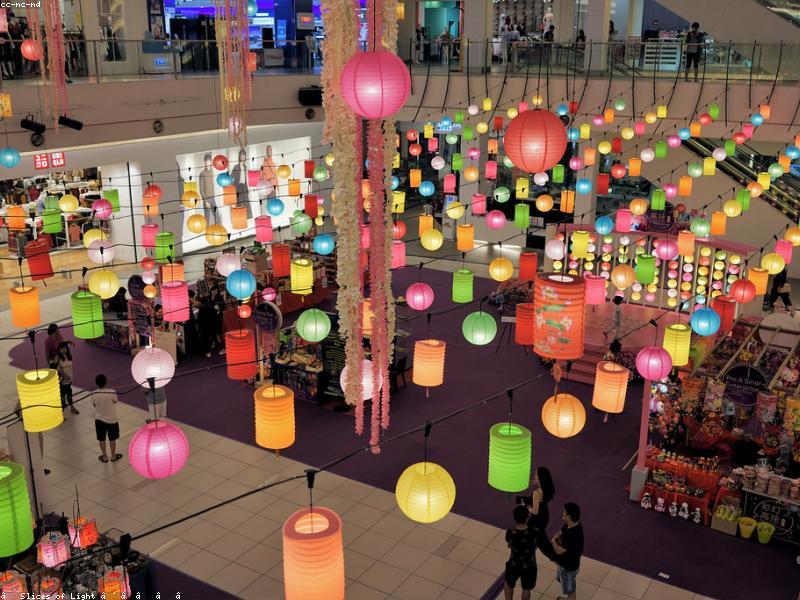
A full moon rising over traditional Chinese architecture with lanterns
Advertisement
Deep Dive
The Legend of Chang'e
The most beloved Mid-Autumn story is the legend of Chang'e (嫦娥). Long ago, there were ten suns scorching the earth. The hero Hou Yi (后羿) shot down nine of them, saving humanity. As a reward, the Queen Mother of the West gave him an elixir of immortality. But Hou Yi did not want to live forever without his wife Chang'e, so he left the elixir at home.
One day, while Hou Yi was away, his apprentice Pangmeng broke into the house demanding the elixir. Chang'e, knowing she could not fight him off, drank it herself. She floated up to the moon, where she has lived ever since — alone except for a jade rabbit who pounds the elixir of immortality. Hou Yi was heartbroken. He set out fruits and cakes on the night of the full moon, looking up at where his wife now lived, and the people around him did the same.
This is why Chinese people gaze at the moon on Mid-Autumn night and why mooncakes are round — they symbolize the reunion that Chang'e and Hou Yi can never have.
Mooncakes: Love Them or Hate Them
Mooncakes (月饼, yuèbǐng) are the iconic food of the Mid-Autumn Festival. They are dense, rich pastries filled with lotus seed paste, red bean paste, or five-kernel mix, often with a salted egg yolk in the center to represent the full moon. They come in elaborate gift boxes and are exchanged between families, friends, and business associates.
Here is the truth most Chinese people will admit privately: traditional mooncakes are an acquired taste. They are heavy, very sweet, and a single one contains roughly 800 calories. The salted egg yolk filling is divisive — some people love it, others find it strange. But mooncakes are a social obligation as much as a food. Refusing a gift of mooncakes would be rude, and the gift-box economy around them is enormous.
Modern bakeries have gotten creative: ice cream mooncakes, chocolate mooncakes, snow-skin mooncakes (冰皮月饼) with fruit fillings, and even truffle mooncakes. These newer versions are genuinely popular with younger generations.
Moon Gazing and Reunion
The core meaning of Mid-Autumn is reunion (团圆, tuányuán). The full moon represents completeness and family togetherness. Families sit together outdoors, drinking tea, eating mooncakes and seasonal fruits (pomelos are especially popular because 柚 sounds like 佑, meaning "blessing"), and watching the moon rise.
In cities where outdoor space is limited, rooftop gatherings are common. Parks and waterfront areas fill with families. Some people release sky lanterns. The atmosphere is calm and intimate — very different from the explosive energy of Spring Festival.
Regional Traditions
Different regions add their own flavors:
- Guangdong and Hong Kong — The fire dragon dance in Tai Hang, Hong Kong, is one of the most spectacular Mid-Autumn events. A 67-meter dragon covered in incense sticks is paraded through narrow streets.
- Fujian — Women traditionally "moon worship" (拜月) by setting up a table with mooncakes, fruits, and incense facing the moon.
- Zhejiang — The tidal bore of the Qiantang River is traditionally watched during Mid-Autumn, drawing thousands of spectators.
- Taiwan — Barbecue has become a surprising Mid-Autumn tradition. Entire neighborhoods set up grills on the sidewalk. How this happened is debated, but it is now as deeply associated with the festival as mooncakes.
Mid-Autumn in Modern Life
The festival is a public holiday in mainland China, Hong Kong, Taiwan, and many Southeast Asian countries with Chinese populations. It is also the second-biggest gift-giving season in Chinese business culture. Companies send mooncake gift boxes to clients and partners — and the boxes get increasingly extravagant, sometimes containing tea sets, wine, or even jewelry alongside the cakes.
For ordinary families, it remains a genuine night of togetherness. Even young people who have moved far from home make an effort to call or video chat with their parents under the same moon.