
What is the Chinese Ghost Festival?
Published: April 29, 2026
Short Answer
The Ghost Festival (中元节, Zhongyuan Jie) falls on the 15th day of the seventh lunar month — a night when the gates of the underworld open and spirits roam the living world. Families burn paper money, set out food offerings, and light lanterns to guide and comfort their deceased ancestors and wandering ghosts who have no one to care for them.
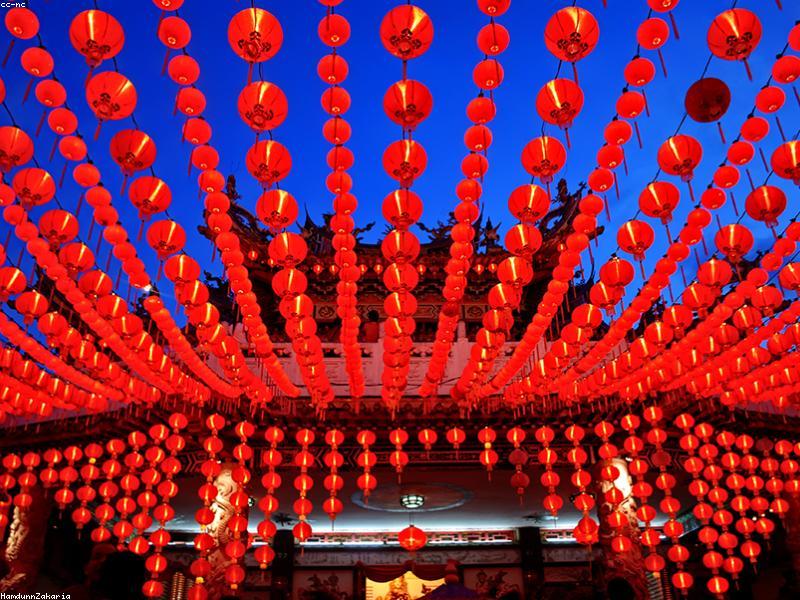
Paper offerings and incense burning at a Chinese temple during Ghost Festival
Advertisement
Deep Dive
The Origin Story
The Ghost Festival has roots in both Buddhist and Taoist traditions. The Buddhist version comes from the Ullambana Sutra, which tells the story of Mulian (目连), a disciple of the Buddha who used his supernatural powers to visit the underworld. There he found his deceased mother suffering as a hungry ghost — a being cursed with an insatiable appetite but a throat too narrow to swallow. The Buddha instructed Mulian to make offerings to monks on the 15th day of the seventh month, and the collective merit would release his mother from her torment.
The Taoist tradition calls this the Zhongyuan Festival, one of three cosmic holidays tied to the three officials of heaven, earth, and water. The earth official's birthday falls on this day, and he is believed to judge the dead and grant pardons.
What Actually Happens
The festival is observed differently across Chinese communities, but several practices are widespread:
Burning paper money (jinzhi, 金纸) — Families burn stacks of spirit money, sometimes printed to resemble bills from the Bank of Hell (天地银行). The logic is straightforward: if your ancestors need money in the afterlife, you send it through fire. Modern versions include paper iPhones, paper cars, and even paper mansions.
Food offerings — Families set out meals at home altars and in the street. The home altar food is for known ancestors; the street food is for wandering ghosts (孤魂野鬼) who have no descendants to care for them. This act of charity toward unknown spirits is one of the festival's most distinctive features.
Floating lanterns — In some regions, people release lanterns onto rivers and lakes. Each lantern carries a small prayer and serves as a beacon to guide lost spirits. The sight of hundreds of glowing lanterns drifting down a river at night is hauntingly beautiful.
Street performances — Chinese opera and puppet shows are staged outdoors, with the front row of seats deliberately left empty for ghostly audience members. These performances are entertainment for both the living and the dead.
Taboos and Superstitions
The seventh lunar month is sometimes called "Ghost Month," and many Chinese people observe a set of taboos throughout the entire month — not just on the festival day:
- Do not swim, because water ghosts are believed to pull swimmers under
- Do not stay out late at night, especially near water or in dark alleys
- Do not open an umbrella indoors, as it is believed to invite spirits
- Do not lean against walls, where ghosts are thought to rest
- Do not whistle or call out names at night
- Do not move into a new home or start a new business during Ghost Month
- Do not pick up money found on the ground, as it may be spirit money left as bait
Regional Differences
In southern China and among overseas Chinese communities (Malaysia, Singapore, Taiwan), the Ghost Festival is taken quite seriously. Elaborate community altars are set up, and entire neighborhoods organize joint offerings. In northern China, the observance tends to be more subdued and family-centered.
In Hong Kong, the festival has a particularly vivid public dimension. Paper effigies are burned on street corners, and the Chiu Chow community stages some of the most elaborate opera performances of the year. In Taiwan, the government actually promotes the festival as a cultural event, with massive pingxi sky lantern releases.
Modern Attitudes
Younger Chinese people often treat Ghost Month superstitions the way Westerners treat Friday the 13th — they know the rules, might half-follow them out of habit, but do not lose sleep over it. However, the core practice of honoring ancestors through offerings remains strong across all generations. Even secular Chinese families who do not believe in ghosts still visit graves and burn paper money during this period. It is less about superstition and more about remembering the dead.