Cantonese vs Mandarin: what is the difference?
Published: April 29, 2026
Short Answer
Mandarin has 4 tones and is the standard language of mainland China and Taiwan. Cantonese has 6-9 tones depending on how you count, and is the primary language of Hong Kong, Macau, and Guangdong province. They use the same writing system for formal text, but spoken Cantonese and Mandarin are not mutually intelligible -- a Mandarin speaker cannot understand spoken Cantonese without studying it separately.
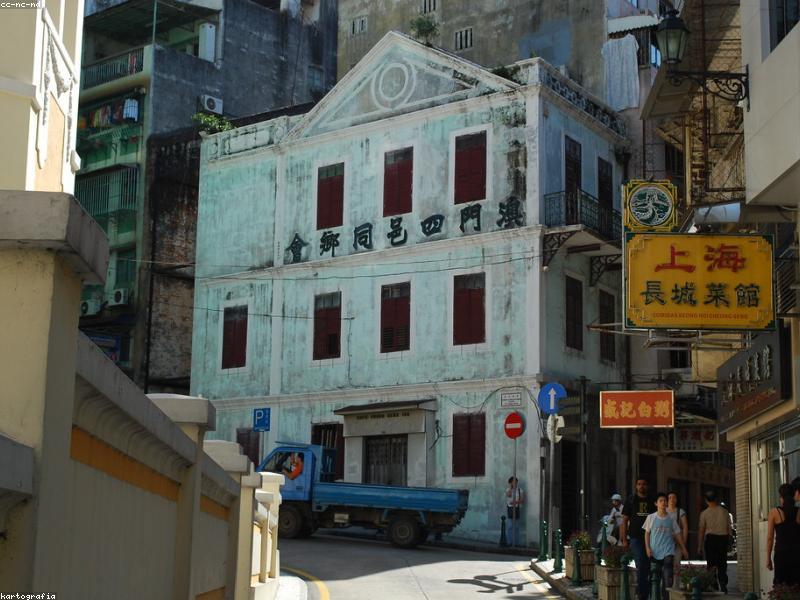
Hong Kong skyline at night with neon signs in Chinese
Advertisement
Deep Dive
Pronunciation: The Biggest Difference
The sound systems of Mandarin and Cantonese are fundamentally different. This is the main reason they are not mutually intelligible when spoken.
| Feature | Mandarin | Cantonese |
|---|----|-----|
| Tones | 4 tones + neutral | 6 tones (some analyses count 9) |
| Final consonants | Only -n and -ng | -p, -t, -k, -m, -n, -ng |
| Syllable structure | Simpler, fewer sound combinations | More complex, more possible syllables |
| Sound inventory | ~400 unique syllables | ~1,700+ unique syllables |
Because Cantonese has far more distinct syllables, there are fewer homophones. In Mandarin, the sound "shi" alone maps to dozens of characters. In Cantonese, those same characters have distinct pronunciations, which makes spoken Cantonese somewhat more precise.
Tones: A Side-by-Side Comparison
Mandarin's 4 tones:
- High flat (mā - 妈, mother)
- Rising (má - 麻, hemp)
- Dip then rise (mǎ - 马, horse)
- Sharp falling (mà - 骂, scold)
Cantonese's 6 tones (using "si" as an example):
- High flat (si - 诗, poem)
- High rising (si - 史, history)
- Mid flat (si - 试, try)
- Low falling (si - 时, time)
- Low rising (si - 市, city)
- Low flat (si - 事, matter)
Cantonese tones are harder for most learners because the pitch differences are subtler and there are more of them.
Writing: Traditional vs Simplified
This is where things get complicated:
- Mainland China uses Simplified Chinese characters (简体字)
- Hong Kong and Macau use Traditional Chinese characters (繁体字)
- Taiwan also uses Traditional characters
In formal written Chinese, Mandarin and Cantonese use the same grammar and vocabulary. A news article written in Hong Kong is readable by a Mandarin speaker. However, colloquial written Cantonese (used in text messages, social media, and informal writing) includes unique characters and grammar that Mandarin speakers may not understand.
Vocabulary Differences
Some everyday words are completely different:
| English | Mandarin | Cantonese |
|---|----|-----|
| To eat | 吃 (chī) | 食 (sik6) |
| To look | 看 (kàn) | 睇 (tai2) |
| Thing/stuff | 东西 (dōngxi) | 嘢 (ye5) |
| Not bad | 不错 (bùcuò) | 唔错 (m4 co3) |
| Chat | 聊天 (liáotiān) | 倾偈 (king4 gai6) |
Which Should You Learn First?
For most people, Mandarin is the clear choice:
- 10x more speakers worldwide
- The standard language of business, education, and government
- Far more learning resources available
- Useful across all of mainland China, Taiwan, Singapore, and most diaspora communities
Consider Cantonese first if:
- You are moving to Hong Kong or Macau long-term
- Your partner or family speaks Cantonese
- You are specifically interested in Hong Kong culture, cinema, or cuisine
- You already speak Mandarin and want to add a second Chinese language
The good news: if you learn Mandarin first, picking up Cantonese later is easier because you already know the writing system and many vocabulary items carry over.