
Chinese funeral customs and etiquette: what you need to know
Published: April 29, 2026
Short Answer
Chinese funerals center on white mourning attire (not black), burning joss paper and incense for the afterlife, and multi-day ceremonies blending Confucian filial piety with regional Buddhist or Taoist rites. Guests wear muted colors, offer condolence money in white envelopes, and follow the family's lead on rituals.
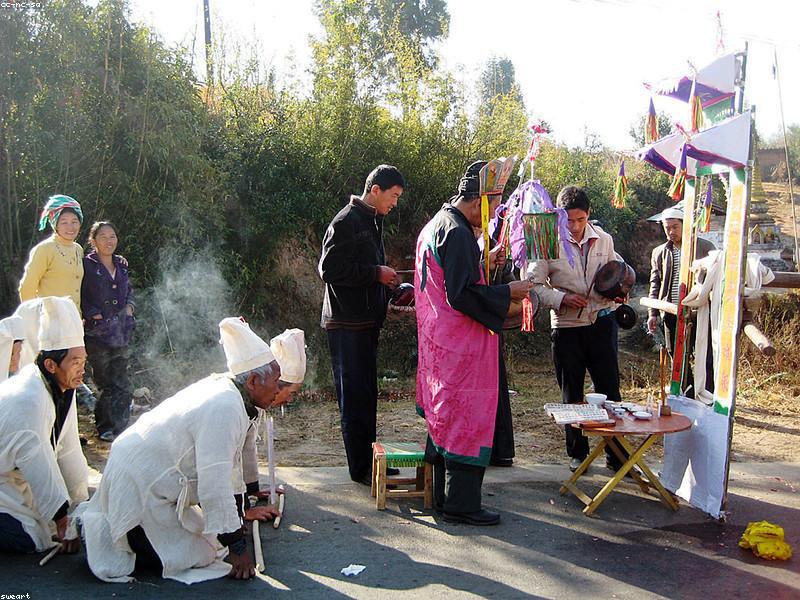
White chrysanthemums at a Chinese memorial ceremony
Advertisement
Deep Dive
The Color White, Not Black
In Western funerals, black is the universal mourning color. In China, it is white. Close family members traditionally wear coarse hemp garments (孝服, xiàofú) in raw white, a practice rooted in ancient Confucian mourning codes. The degree of roughness and duration of wearing white correlates with how closely related you were to the deceased. Extended family and friends may wear small white fabric squares pinned to their sleeves as a sign of shared grief. Today, especially in urban areas, dark somber clothing is also acceptable for guests, but white remains the defining color of Chinese mourning.
Multi-Day Ceremonies and Wake Traditions
Chinese funerals are rarely single-day affairs. Depending on the region and family's means, ceremonies can last three, five, or even seven days. The body is typically displayed in an open casket at a funeral parlor or the family home. Visitors arrive during the wake period to pay their respects. Upon entering, guests bow or kowtow before the portrait of the deceased, light incense, and offer words of condolence to the family. Joss paper (纸钱) and paper replicas of worldly goods — money, houses, cars, electronics — are burned in braziers, sending these items to the afterlife for the departed to use. This ritual reflects the deep Chinese belief that ancestors continue to need provisions in the spirit world.
Condolence Money (帛金)
When attending a Chinese funeral, it is customary to bring condolence money (帛金, bójīn), placed in a white envelope. This contribution helps the family offset funeral costs. The amount should be odd numbers (e.g., 101, 301 yuan) — even numbers are associated with celebrations like weddings. Some families provide small amounts of cash or candy in return, symbolizing that the guest's life force should not be carried away by misfortune. If you are unsure about the amount, match what peers or colleagues are contributing, or ask a close family friend.
Funeral Processions and Burial
Traditional funeral processions involve a slow march to the burial or cremation site, led by a band playing mournful music and sometimes accompanied by lion dancers or Taoist priests chanting sutras. The eldest son typically carries the funeral banner or portrait at the front. Mourners walk in order of seniority. Modern urban funerals in China are more streamlined — cremation is mandatory in most cities — but rural areas and overseas Chinese communities still hold processions. The practice of scattering ashes at sea or in designated memorial gardens is growing in popularity.
Etiquette for Non-Chinese Guests
If you are invited to a Chinese funeral, dress conservatively in dark or white clothing. Avoid red entirely — red is the color of joy and weddings. Arrive during the wake hours, bow before the altar, and offer your condolences to the immediate family with simple, sincere words. Do not take photos unless explicitly invited to. Flowers are welcome; white or yellow chrysanthemums are the traditional funeral flower. Follow the family's lead on any rituals — if they invite you to light incense or bow, participate respectfully. The most important gesture is your presence, showing care for the living and respect for the dead.