
How to book train tickets in China as a foreigner
Published: April 29, 2026
Short Answer
The easiest way for foreigners to book Chinese train tickets is through Trip.com, which has an English interface and accepts foreign credit cards. The official 12306 app is free but in Chinese and requires a Chinese phone number. Book tickets 15 days in advance, as popular routes sell out fast. Your passport is your ticket -- e-tickets are linked to your passport number, so no paper ticket is needed.
China high-speed train at station platform
Advertisement
Deep Dive
Booking Platforms Compared
Trip.com (Recommended for foreigners)
- English interface, easy to use
- Accepts Visa, Mastercard, PayPal, Apple Pay
- Book up to 15 days in advance
- Small booking fee: $1-3 USD per ticket
- E-ticket linked to your passport -- just scan passport at the gate
- Customer service in English
- Also works for flights, hotels, and attraction tickets
- App available on iOS and Android
12306 (Official China Railway app)
- Chinese language only (use Baidu Translate or camera translate)
- No booking fee
- Requires Chinese phone number for registration
- Accepts some foreign credit cards now, but often fails
- Book up to 15 days in advance
- The website (www.12306.cn) is slightly easier to navigate with browser translate
Other options:
- China Highlights: English service, slightly higher fees than Trip.com
- Ctrip (Chinese version of Trip.com): If you read Chinese, this has more features
- Train station counters: Buy in person with your passport. Works but involves queuing (sometimes 30+ minutes)
Ticket Types and Classes
Seat classes:
| Class | Layout | Price (relative) | Best For |
|----|-----|-----|----|
| Second Class | 2+3 per row | Base price | Most travelers |
| First Class | 2+2 per row | 1.5x second class | More comfort |
| Business Class | Lie-flat seats | 2.5-3x second class | Luxury, long trips |
| Standing (zhan piao) | No seat | 0.5-0.8x second class | Short trips, last resort |
Sleeper trains (overnight, slower trains):
| Type | Description | Price |
|---|----|----|
| Hard sleeper (ying wo) | Open bunks, 6 per compartment | Budget option |
| Soft sleeper (ruan wo) | Private 4-bed compartment | Comfortable |
| Premium soft sleeper | 2-bed private compartment | Most comfortable |
Hard sleeper is the classic Chinese train experience. Lower bunk is most expensive and has the most space. Upper bunk is cheapest but claustrophobic.
Passport Requirements
Your passport is your ticket. Since 2020, China has moved to e-tickets for most trains. Here's what you need:
- Your passport number must match the booking exactly
- Name must match your passport (use your passport name, not a nickname)
- Bring the physical passport -- digital copies don't work at gates
- Some stations require you to scan your passport at a manual gate (staff will help)
- Children need their own passport and ticket
Step-by-Step: Booking on Trip.com
- Download the Trip.com app or visit trip.com
- Search: enter departure city, arrival city, and date
- Results show all available trains with departure times, duration, and prices
- G-trains are fastest (300-350 km/h), D-trains are slightly slower, K/T/Z-trains are slow overnight trains
- Select your train and seat class
- Enter passenger details: full name (as on passport), passport number, nationality
- Pay with credit card, PayPal, or Apple Pay
- Receive confirmation email with e-ticket details
- At the station: scan your passport at the gate or show it to staff
Understanding Train Numbers
- G (高铁): High-speed, 300-350 km/h. Beijing-Shanghai in 4.5 hours. Most popular.
- D (动车): High-speed, 200-250 km/h. Slightly slower, often on shorter routes.
- C (城际): Intercity, short distances between nearby cities.
- K (快速): Regular speed, 120 km/h. Often overnight with sleepers.
- T (特快): Faster than K, same concept.
- Z (直达): Direct express, fewer stops.
Station Navigation
Before boarding:
- Arrive 45-60 minutes early (30 minutes for small stations)
- Enter through the main entrance and pass security (X-ray bags, like airports)
- Scan your passport at the ID verification gate or show it to staff
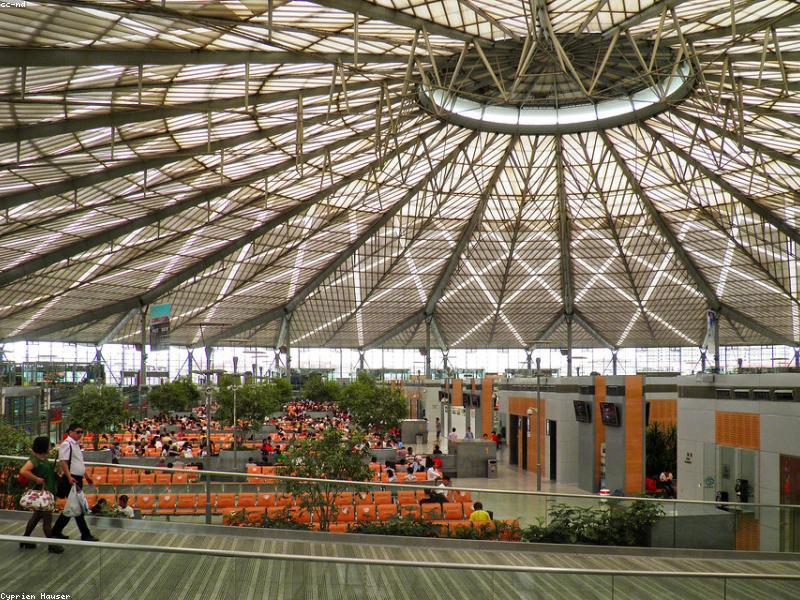
- Find your waiting hall (候车厅) -- screens show which hall your train departs from
- Wait for your train to appear on the boarding screen
- Line up at the gate -- it opens about 15 minutes before departure
At the platform:
- Your car number is marked on the platform floor
- Stand at the marker for your car number
- The train stops precisely at each marker
- Find your seat number on your ticket/app
Luggage:
- Official limit: 20kg per person (not enforced)
- Large suitcases: overhead racks or luggage area at the end of each car
- No checked luggage
- Bikes must be disassembled and boxed
Common Mistakes
- Wrong station: Many cities have multiple train stations (e.g., Beijing has Beijing Station, Beijing West, Beijing South, Beijing North, Beijing Chaoyang). Always check which station your train departs from.
- Wrong date: Tickets are date-specific. You can change dates at the station counter (subject to availability) but it's a hassle.
- Forgetting passport: You cannot board without your physical passport. No exceptions.
- Booking too late: Popular routes (Beijing-Xi'an, Shanghai-Hangzhou) sell out days in advance during holidays and weekends.
- Not knowing your seat: If you booked a standing ticket, there's no assigned seat. Find any open seat and move if the actual passenger arrives.
Tips for Foreigners
- Book early: Tickets go on sale 15 days before departure. Popular routes sell out within hours during holidays.
- Avoid holidays: Chinese New Year (January/February), Golden Week (October 1-7), and Qingming Festival are when everyone travels. Trains are packed and tickets sell out instantly.
- Charging outlets: Every seat has access to power outlets (220V and USB). Bring your charging cable.
- Food on board: Dining car meals are 30-60 RMB. Vendors sell snacks and boxed meals. Hot water is free at the end of each car for instant noodles.
- Wi-Fi: Available on most high-speed trains but slow and requires a Chinese phone number to log in. Download entertainment before you board.
- Bathrooms: Located at the end of each car. Bring your own tissues. Squat toilets on older trains, sitting toilets on newer ones.
- Announcements: Train announcements are in Mandarin and English on high-speed trains. Regular trains may be Mandarin only.
Price Reference (Second Class)
| Route | Duration | Price (approx) |
|----|----|----|
| Beijing - Shanghai | 4.5 hrs | 550 RMB ($75) |
| Beijing - Xi'an | 4.5 hrs | 520 RMB ($70) |
| Shanghai - Hangzhou | 1 hr | 75 RMB ($10) |
| Guangzhou - Shenzhen | 30 min | 75 RMB ($10) |
| Chengdu - Chongqing | 1.5 hrs | 150 RMB ($20) |
| Xi'an - Chengdu | 3 hrs | 260 RMB ($35) |
| Shanghai - Nanjing | 1 hr | 140 RMB ($19) |
| Beijing - Harbin | 5 hrs | 440 RMB ($60) |