
What are toilets like in China?
Published: April 29, 2026
Short Answer
China has two types of toilets: squat toilets (the most common, especially outside major cities) and sitting toilets (standard in hotels and upscale venues). Always carry your own tissues and hand sanitizer, as public restrooms often lack both. High-end hotels, international airports, and malls in major cities have Western-style facilities, but once you leave the tourist trail, squat toilets are the norm.
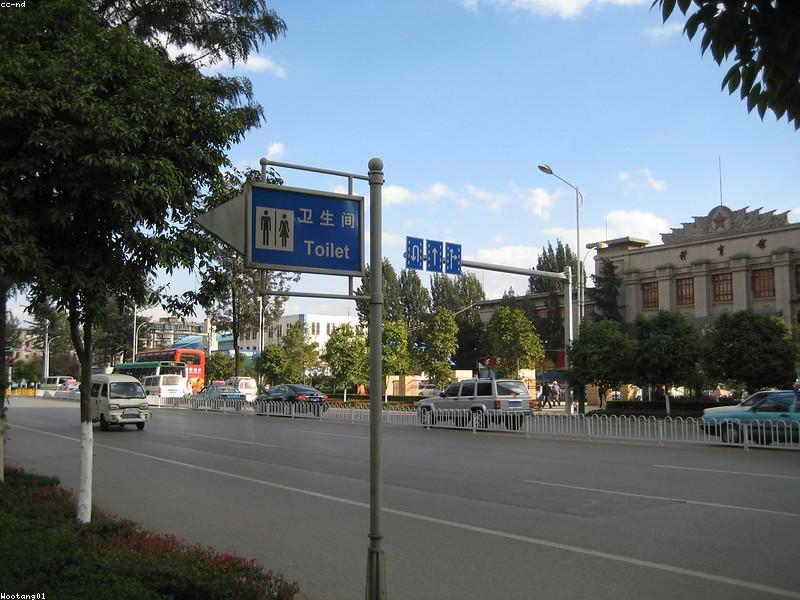
Modern public restroom in China
Advertisement
Deep Dive
Squat Toilets: What to Expect
Squat toilets (cèsuǒ) are porcelain or ceramic basins set into the floor. You squat over them facing the hood/curved end (the part with the splash guard). This is the default toilet in most of China, especially:
- Train and bus stations
- Public restrooms in parks and tourist sites
- Older buildings and restaurants
- Rural areas and smaller cities
- Even some airports (though they usually have at least one Western-style stall too)
How to use a squat toilet:
- Face the hooded/raised end (the splash guard)
- Squat with your feet on the textured foot pads on either side
- Pull your pants down to your knees -- don't let them touch the floor
- The flush mechanism is usually a foot pedal, a button on the wall, or a handle
Tips for beginners:
- Wear shoes with good grip -- wet restroom floors are common
- Avoid loose-fitting pants that might drag on the ground
- Practice squatting at home if you're not used to it -- it gets easier
- Some stalls have a small shelf or hook for your bag; use it
- If there's no flush mechanism, look for a bucket of water and a ladle -- pour water to flush
Sitting Toilets
Western-style sitting toilets are increasingly common in:
- International airports (all major cities)
- 3-5 star hotels
- Shopping malls and department stores
- Starbucks, McDonald's, and Western restaurants
- Newer office buildings and restaurants in tier-1 cities (Beijing, Shanghai, Guangzhou, Shenzhen)
However, even in places with sitting toilets, you may find that:
- The seat is sometimes wet (some people squat ON the sitting toilet)
- Seats may be missing in some public restrooms (people stand on the rim)
- Bidet features are rare except in high-end hotels and Japanese-style toilets
The Tissue Situation
This is one of the biggest surprises for foreigners. Most public restrooms in China do not provide toilet paper. This is improving in major cities, but you should never rely on it.
Always carry:
- A pack of tissues (chouzhi / 抽纸). Sold at every convenience store for 1-3 RMB.
- Hand sanitizer. Many restrooms lack soap.
- Wet wipes for extra hygiene.
Where toilet paper IS usually provided:
- Hotels (always)
- International airports
- Starbucks, McDonald's, KFC
- Upscale restaurants and malls
- Newer public restrooms in major cities (but don't count on it)
Where toilet paper is NOT provided:
- Train and bus stations (sometimes available for purchase at a vending machine outside)
- Older public restrooms
- Parks and tourist sites
- Small restaurants
- Rural areas
Important: Even when toilet paper is provided, do NOT flush it in many older Chinese buildings. The plumbing can't handle it. Look for a wastebasket next to the toilet -- this is where used paper goes. It seems gross at first, but it's standard practice and prevents plumbing disasters.
Finding Decent Restrooms
- Hotel lobbies: Walk into any hotel lobby and use the restroom. Nobody checks if you're a guest. This works at 3-star and above hotels.
- Starbucks and McDonald's: Reliable, clean, and usually have Western-style toilets with paper.
- Shopping malls: Modern malls in major cities have excellent restrooms on every floor.
- Apps: Baidu Maps shows nearby restrooms. Search "cesuo" (厕所).
- Tourist sites: Major tourist attractions (Forbidden City, Terracotta Warriors) have well-maintained restrooms. They may charge 1-2 RMB.
Special Situations
Train restrooms: Long-distance trains have restrooms at the end of each car. They're basic but functional. High-speed trains have slightly better ones. Bring your own tissues. The toilets on trains flush directly onto the tracks (older trains), so they're locked when the train is stopped at a station.
Highway rest stops: Gas station restrooms along highways are hit or miss. Some are clean and modern; others are memorably bad. The newer ones on major highways (G-series) are generally decent.
Paid restrooms: Some public restrooms charge 1-2 RMB. They're usually cleaner. Have small change ready.
Disabled restrooms: Available at airports, train stations, and larger malls. Often the cleanest stall and usually has a sitting toilet.
What About Men's Rooms?
Men's urinals are standard and easy to use. The main issue is that some men's rooms don't have dividers between urinals, which can feel awkward. Cubicles with sitting or squat toilets are also available in men's rooms.
Toilet Paper Etiquette Summary
| Situation | Toilet Paper Provided? | Flush or Bin? |
|-----|----|---|
| Hotel | Yes | Flush |
| Airport | Usually | Flush |
| Train | No | N/A (bring your own) |
| Mall | Usually | Check for bin |
| Street restroom | Rarely | N/A |
| Restaurant | Sometimes | Check for bin |
| Rural area | No | Always bin |
Golden rule: Always carry tissues. Always.